
Podcast: Scale Tales
Ep. 49: How Clarence Levy Scaled His Project Management Skillset Through Entrepreneurship
Listen Now
Coming Soon
Subscribe
 Apple Podcasts
 Spotify
 YouTube
In high-pressure environments, leaders are often forced to choose between speed and integrity, and those choices can define an entire career. Clarence Levy III, PMP, PMO Director at Equilibria and founder of Levy 3 Consulting, knows this tension firsthand after navigating a high-stakes, multi-million-dollar endpoint product launch that ultimately reshaped his professional path.
Clarence takes us behind the scenes of a New Product Introduction (NPI) where unrealistic deadlines, leadership silence, and mounting competitive pressure threatened both quality and credibility. He explains how disciplined documentation, risk-based planning, and truth-telling protected customers and his professional reputation—and how those same skills became the foundation for building a fractional PMO business that helps organizations scale without unnecessary overhead. Along the way, Clarence reveals how he merged seemingly unrelated talents from music production to systems design into a differentiated consulting and training practice.
Key Takeaways
- How to maintain integrity and credibility when leadership demands unrealistic timelines.
- Why documentation and paper trails are essential tools for risk management and professional protection.
- How “run-at plans” help leaders balance aggressive targets with realistic delivery.
- The strategic value of fractional PMO services for small and scaling organizations.
- How entrepreneurship amplifies, rather than replaces, deep operational expertise.
Join us with Clarence Levy III as he demonstrates how ethical decision-making, disciplined project management, and entrepreneurship can work together to scale both your impact and your skillset.
Episode Info
Special Guest: Clarence Levy III – Owner
Location: Lawrenceville, Georgia, United States
Air Date: February 01, 2025
Transcript
This podcast is brought to you by Equilibria, Inc. Did you know you can earn PDUs repurposed from listening to this show? It’s easy, accessible, and submitted directly to PMI. Keep listening to learn more.
In three easy steps – Visit ScaleTalesPodcast.com, sign up for a membership, take a short quiz and we’ll submit your credits to PMI. Yes, it’s really that simple and all at a price that makes this information accessible wherever you are. No gimmicks, no games. It’s really that simple! ScaleTalesPodcast.com.
Welcome to Scale Tales – the business storytelling podcast where entrepreneurs, executives and experts share firsthand accounts of those magical moments when they achieved something bigger than even they could have imagined.
My name is Alicia Butler Pierre and I have a question for you. Have you ever reached a point in your career or maybe even in your business where your expertise is undeniable, but your work environment becomes untenable? If so I can assure you, you are not alone! Our next guest is a musician and an entrepreneur. He also leads the project management office at Equilibria, the company behind this podcast.
But long before he was any of these things, he was a Senior Project Manager at a wireless company facing an impossible choice: his integrity or his job. He didn’t know it at the time, but his ethics were about to be challenged in a way he had never experienced before. He was about to get an accelerated education that didn’t involve a traditional classroom.
This is Ep. 49: How Clarence Levy Scaled His Project Management Skillset Through Entrepreneurship.
Hello, my name is Clarence Levy, PMO Director at Equilibria, Incorporated and founder of Levy 3 Consultants. I’m currently in the Metro Atlanta, Georgia area and this is my scale tale.

It started, in the third or fourth quarter of 2018. I was working in an enterprise job here in the Atlanta area at a wireless company that worked with utilities. I had been doing wireless work for so long and at this point I had become a PMP at this company back in 2012 and had been growing. I’m senior project manager at this point and everything’s going fine.
And then we get a new CTO. We were in manufacturing, and we were in very highly regulated areas and it was sensitive electronic wireless equipment, it needed to be able to stay in the field for long periods of time – 20 years. So the testing was very rigorous.
And we were working on a new generation of product and we were having some trouble in manufacturing. I think there were some things going on with the circuit boards. We were doing engineering work, we were fixing things I was the program manager and we got into a crunch. It got to a point where my integrity was challenged. Because as a project manager, you ant to tell the truth about what’s going on in your project.
At this company, we built RF wireless metering modules. We all have seen the people from utility company come up and measure because that’s how you’re going to get your bill, right? They come up they read a dial they take it down and they move on. They don’t have to do that anymore because we are able to put wireless modules into those meters that talk back to a base station that go back onto a cloud, and bring that data back.
So We were introducing a new generation of modules. Before, we were doing unlicensed spread spectrum radio, but now we were looking at cellular. This was a new product with new capabilities and functionality, just basically meeting the industry where it was. This was the new line of end points, if you will. Of course the legacy stuff that was in the field worked just fine. But the new stuff we had to work out some kinks. Everything in technology gets smaller, right? All of our technology gets smaller as time goes on. So our modules and everything were getting smaller. Engineers know you’re going to have issues when you shrink things down for space, and you got to work through these things.
This was millions of endpoints. It would have encompassed the whole customer base of the company. So it wasn’t like a small number of customers. We’re talking millions of customers. Going to market with these end points. What pushed us there? Our competitors because the competitors are putting things out there on the cellular network, no longer this proprietary network and the spread spectrum network you know, it helps to have that private data, but at the same time, you can still get private data and you can probably do this cheaper with a cellular module. So we had to be able to play in that arena in order to be competitive.
Whenever I was in meetings and was told to give reports of where we were and what our milestones were, and how we were looking against our KPIs, I told the truth I said, “Well, right now we failed a test of some sort and this is going to be the impact and this is what we’re going to have to do in order for us to get back on track and get this product where we need it to be.”
She just wasn’t hearing it. I don’t know if it was the pressure from above, which a lot of times all that pressure trickles down. Whatever it was, she was not hearing the realistic estimates that I was giving. If I told her it was going to take us six weeks, she said, “Unacceptable, we need it in three.” My dad used to tell me, “Money don’t grow on trees.”
If I’m telling you that it’s going to take this long, then it’s going to take that long.
Pressure at work has a way of following you home. For Clarence, it wasn’t just about the stress – that was just part of the job, especially when you’re in a high stakes situation. This was about the disrespect and disregard of his insights. Interacting with this new CTO became a real-life clash of the Titans. But Clarence had a plan, one that, years later would prove his original target deadlines right.

I made sure that I documented everything I didn’t know what this was really doing for me. I was under a lot of pressure. I was bringing that back home to my wife and my daughter was one going on two. I was stressed out. I was making really, really good money. A lot of times that’s what makes you stay there and take that torture. But it got to a point where she was being disrespectful, talking down to people. And there seemed to be no allies—no one in HR, no one in leadership above me or above her.
In the world of project management, this effort to design, test, and deploy new meters is known as NPI or New Product Introduction. As I listened to Clarence share the context of this project, I started to imagine what could have been happening with the CTO.
She knew that competitors were encroaching on their customer base with leaner, newer technology. I’m sure she also felt the pressure to go-to-market as soon as possible. As you’ll soon hear, Clarence revealed that her C-suite peers listened to his advice to not sacrifice quality for speed. Yet, somehow, it still fell on deaf ears when it came to the CTO herself. It seems like she just simply had an ax to grind, especially when it came to deadlines.
I’ve been on projects where we’ve met the date, been early, under budget, many times. And I’ve always been able to close my projects within threshold. There have been times whenever you have to go through a change management process, but once you go through that change management process, the new milestones are the new dates, the new baselines and new baseline. So you’re still delivering on time.
That’s the thing. I don’t know the pressure that was coming to her, but I will tell you this, all the other leadership seem to understand our concerns and what we were saying, because the thing is, it’s one thing to win business, but if you win business with a faulty product, what does that do? Especially in the industry like utilities. If you have data outages because your module didn’t pass testing but you put it out there anyway all of a sudden water has gotten in it, or it’s gotten too hot or too cold. And it’s not responding because you cut corners? You knew that you didn’t pass that testing, but you it out there anyway. Now what? Right?
That’s the stuff I was protecting against. As a project manager, one thing you do understand is that you’re working for your client. So if your client at the end of the day says, “I need you to walk across water,” you’re going to try to walk across water, but you will let them know these are the risks of walking across water. And this is what may happen if I try, as long as I warn you, I’ll push forward with you, but not before I let you know what you’re up against.
We were just trying to let her know what we were up against and she didn’t want to hear it. And there were other leadership members at her level or above that were quiet. They weren’t necessarily going with her, but they were very quiet.
Silence from leadership can be just as damaging as a toxic CTO. But the truth eventually wins. Tension was escalating.
They described her as a cancer. That’s what they said because she ran off a lot of good people. Two of my bosses, about six or seven project managers including myself, others from product management and some others from engineering. She made a mark.
A mark that would leave a permanent imprint on Clarence’s mind, not in a bad way; rather, in an empowering way. With no relief in sight, one day he found himself alone. Little did he know he was about to receive a phone call that would change…everything!
I remember being in a conference room by myself probably decompressing and my phone buzzed.
And I looked at my phone and y wife texted me and she said, “Go ahead and write the letter, we got your back.”
And when she said that, weight lifted off my shoulders. I walked out of that conference room smiling and people were like, “Why are you so happy?” That’s when I went to go tell my boss, “Man I’m out of here.” It was changing who I was. It was better for me to go.
And I was not the only casualty; the whole department was basically leaving. I got with my boss I let him know “Hey, I’m going to leave, but I’m not going to leave everybody high and dry.” He asked me if I could stay until March of 2019.
This is when the universe starts to work. This is 2019. I had a rental property and those tenants had to leave because they had to move out of state. I had that house for 13 years, no problems. All of a sudden I was going to be an active landlord, which I didn’t have to be before because they were such good tenants. And I thought about it, do I really want to do this or do I want to just cut my losses? So we sold the house, took that money. And as this was going on at my old job, that CTO was still wreaking havoc through the hallways.
As a project manager I learned that there’s nothing that beats reporting, there’s nothing that beats paper trails. There’s nothing that beats good records. Every recommendation I gave, if she said it was going to take two weeks and because of historical data. I said it was going to take six weeks. If she wanted to release to September but it wasn’t going to happen until December, I told them the realistic date was December and that we pulled it back to September because she wanted it to be that way.
And so I left with a clear conscience, had the money there to kind of get started from the property and didn’t really know what I was going to do.

By this point, it’s 2019. Clarence walked away from that stressful situation leaving a well-documented paper trail behind him. But now what? What will he do with himself? He knows he has many talents, but what’s next? The thought of venturing into the unknown could be just as stressful as managing that high-stakes project. Well, it turns out selling his rental property would serve as seed money for putting one of his talents hidden from the project management world on front and center stage.
The first thing that I said I was going to do, because people who know me know I’m multifaceted. My dream was to produce music. The music is going well and I’m doing film and TV and music and that’s lucrative when it happens. So I came up with a business plan to run my music company. I’m throwing engineering away and I leave. Needless to say, we put out some good music projects, but music doesn’t do what engineering does. Luckily, there was some people, including Alicia and Equilibria, who needed project management help.
And so I came in and started doing some project management for Equilibria. I also ran into a former classmate from Morehouse who was working on a government grant project and needed a project manager for this particular project. Now I’m building things, and all this is organic. None of the project management stuff I’m doing now was planned because I was supposed to be Tre Traxx the producer. I was not supposed to be Clarence Levy III, PMP.
But he is Clarence Levy III, PMP as well as Tre Traxx as well as a husband, father, son, brother, mentor among other things. Unfortunately, though, in a world obsessed with social media profiles and short form content, many of us have to choose which of our many talents to showcase online. If we show all of them, we run the risk of people thinking we’re unsettled, all over the place, a jack-of-all-trades, master of none. If we only show one side of ourselves, people miss our breadth and depth. None of us are one-dimensional.
It is possible to be really good at multiple things. Remember that documentation of original deadlines Clarence mentioned? Well, by 2020, nearly a year after he left that stressful job, some of his former co-workers contacted him. And they had a lot to say.
They were using my reports and they should have, because I left it that way, but they were using my reports to show what the real estimates were going to be. And things were falling where I said they were going to fall.
So that was a testament to myself that I knew what I was doing because when you’re successful people are telling you okay, but when you’re in a tough period that’s when you start to second guess yourself “Am I good at this?”
The answer is yes. And, it turns out, there’s one more thing that Clarence’s former co-workers revealed to him. That CTO who caused him and others so much stress? Well, she was fired.
Coming up after the break, Clarence will share with us more details on how he parlayed his musical ambitions, project management experience, and newfound freedom into a business that would, well, change everything!
Are you a certified Project Management Professional? Just imagine, you can literally listen and learn while you earn credits. Yes, even while you’re taking a long walk, driving to or from work, even while you’re on an airplane. The good thing about our podcast episodes is that you don’t have to watch them in order to earn your PDUs.
In three easy steps – Visit ScaleTalesPodcast.com, sign up for a membership, take a short quiz and we’ll submit your credits to PMI. Yes, it’s really that simple and all at a price that makes this information accessible wherever you are. No gimmicks, no games. It’s really that simple! ScaleTalesPodcast.com.
Welcome back! Before the break, you heard from Clarence Levy III – a seasoned and certified project management professional and music producer. Let’s go back to the year 2019. He left a project that, were it not for a new CTO who joined the company, he likely would have never left. But he did leave. He even sold a rental property that he had and used that to pour money into his musical interests. He was done with project management. At least, that’s what he thought. Here’s Clarence.
By June of 2019 I started Levy 3 Consulting. I had been working on this music and what happened is not that I didn’t think the music was going to pop, I just was thinking okay I need some time to fill in while the music gets this thing going. So let me just fall back on what I know how to do, which is project management.
Through his consulting company, Levy 3 Consulting, Clarence offers fractional PMO Services. PMO stands for Project Management Office. People with a corporate background likely know what PMOs do, but others likely do not. So, what exactly does it mean to provide fractional PMO services?
Great question, great question. Usually a smaller business is not going to have the capital to be able to have a full-time PMO with project managers and all that. But what they can do is they can have a service like mine come in and for a time being and set up a framework that you can work from and I walk away and you can use that framework going forward. I can also come in and set up a PMO framework and actually work within that framework to run projects through Levy 3 Consulting.
You have a special project? You don’t need someone on full-time for years but you may need them for six months, I can come in and work that special project. So basically anywhere where you may feel that there is a gap where you may need professional project management or project management office or organization type of work done, that’s where I can come in and fill that gap. I don’t need to be there 40 hours a week. I’m there for that fraction of services that you need.
Hence the word fractional. The challenge in offering PMO services, particularly for small businesses, is first, a lack of awareness about project management itself. I asked Clarence if the pushback he receives is largely due to people thinking that his services are purely overhead – why do they need someone to help them manage their tasks? Or, is it that they just don’t see the value?
It’s both. There are people in enterprise companies that don’t know what project management really is engineering companies have gotten it pretty well, but when you get into more of your creative businesses and more business-type financial areas, and things like that, they’re not thinking they need a project. Everybody thinks, If I’m building something I need a project manager but I don’t need a project manager for my everyday types of operations.
And this is the thing, a lot of times if a small business ties up a lot of money doing an RFP, they want to come in low. They want to be competitive and so they think if I add this project management service onto my bid you’re going to knock me out. But what they don’t understand is that a lot of times having a professional project management office or some fraction of the services actually helps you to cut down on costs. Because 75% of projects go beyond the budget, beyond the schedule.
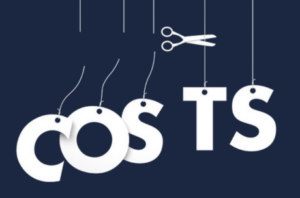
So when that starts to happen, nine times out of ten the rework you have to go through if you’re not organized and not ready to respond to these risk triggers, that will cost you more than if you just hired me from the beginning and we put together a comprehensive plan that tells you from a holistic standpoint to understand what we may come across in the future, risk-wise. And so I would say it’s both. They see me as overhead and they also don’t understand what I do. They think that I’m a glorified note-taker that goes and says “Hey, did you remember to do this?” That’s not it at all.
I’ll be honest, that’s what I used to think too. I used to think of project management as babysitting – you know, running behind people making sure they are doing what they are supposed to be doing and checking off boxes on a checklist of tasks to complete. But there’s so much more to it than that! Truthfully, my initial exposure to project management was extremely positive – it was when I worked at an engineering consulting firm.
But then, over time, as I worked with people in other, largely service-based areas, I saw a significant decline in how projects were managed. It even happened in my own company, Equilibria! For example, we once had someone on the team who would put tasks into Monday.com for us. Monday is a project management software. But the tasks associated with our daily processes were still managed through the process itself. We were convinced that Monday.com was an unnecessary expense that didn’t add much value to the way we worked. I was close to deactivating the entire account.
It wasn’t until Clarence took over that we learned just how much of a deficit we were functioning in. He took our key process flow diagrams, converted them into templates with repeatable tasks within Monday.com, and created automations that streamlined our work significantly. Now, our Monday.com setup looks like an enterprise level machine. When I think about what our team accomplished in 2025 alone it’s evident we would not have been able to reach that kind of scale so quickly without having his fractional PMO service.
When they start to understand what I’m really doing, when I’m coming in and I’m setting up a project management information system or a PMIS they may have SmartSheet, Wrike or Monday.com or they may have Asana or Jira, but they’re using 5% of what it can do. And then I come in there and I start using it at 50%. And before you know it if I’m able to sit down and really get into it, I can start to do some scary things, and that’s where I learned that I actually love doing that stuff. As boring as it may sound or as nerdy as it may sound, I like it.
It’s a sense of accomplishment when you can help a customer to not only understand that project management is not overhead, but there’s a value to it, that actually will help you if you deliver beforehand, you can actually get bonuses and win you more business if they see that you do this professionally and you can actually deliver.
I can come in a few hours a week, get everything set up, set up meetings, cadences and make sure that integration is happening and that we’re not dropping tasks and that we’re doing reporting how we should. Working with Equilibria, one thing that I like is that you give great direction so there’s times you’ll come and tell me things and you’ll tell me that I can do something before I know I can do it. And what happens is I go off and I start tinkering around and before you know it, I’m like “Yeah we can do that.”
This has helped me to be slow to say I can’t do something and to listen and say “Okay let’s see how we can get it done or let’s get close to what you want.” And so that’s what I’ve learned to say tell me what it is you’re looking for, what you want to see, and then I’m going to figure out how to get there.
This is interesting to me and I don’t know if you also caught this – but did you catch the difference in how Clarence speaks about asking his client’s what they want and then he figures out how to make that happen compared to his experiences in working with that, hmm, how should I describe her, that sassy CTO? I asked him to explain this difference.

It depends on what you’re doing. With Equilibria, I haven’t been told anything irrational. I may not know how to do it off the top when it’s being told to me but it’s not irrational. Everything that I’ve heard with Equilibria has been rational, even if it’s something we haven’t done yet, it’s new ground that we’re breaking. But it’s rational. The stuff with the sassy CTO was irrational, this is stuff that we did all the time. She came from another company that did things totally different way. That company actually went out of business and I’m not going to say what company that was, but she came in from this company that went out of business and she brought some bad habits. And the way she handled people. It may have been different if she handled us with more respect. I feel respected at Equilibria. And that actually let me know that I didn’t have to deal with disrespect anymore.
And that’s because Clarence is really good at what he does. And not only that, he’s able to fuse his musical talents into the services he provides as well. For example, here at Equilibria each of our podcast episodes are managed like a miniature project, complete with workflows and automated task tracking. One of those tasks is sound design. Clarence creates the music and sound effects you hear on each episode of Scale Tales.
His music company, Sabor! Music Enterprises is the company mentioned in the ending credits of each episode. If you are curious about what you and your team can accomplish in a project management information system like Monday.com, then I highly recommend you watch the demo video Clarence will give.
Yes, yes, in the demonstration I will be showing how to theoretically set up a project in a PMIS, a project management information system. The two systems I’m using in my demonstration is Monday.com and Wrike. I would say those two are my favorites right now in project management at this level. In that video I’m, I’m showing you what the boards look like, what the setups look like, what automations are in there that you could apply to what you’re doing. If you want for instance an automation for a Scrum meeting, daily Scrum. I’ve got that coming in, so I’ll show that in that recording.
So, that’s one resource Clarence has for you – that demo video. That requires membership to view. We’ll have a link to sign up in this episode’s show notes. Another resource is Clarence’s PMP Exam Prep course. After listening to this episode, you may want to become a certified project management professional, or you may be interested in having some of your team receive the training and certification.
Now we’re getting into that scale this is that decision back in 2018 and everything that happened going into 2019 has now led me here. I’m doing things I never thought I’d be doing. If you would have told me that I was going to be part of an authorized training partner outfit to go and teach other project managers two years ago I would have laughed at you. But I am actually doing that now, so I have now scaled my business by growing with other small businesses.
I’m growing as I’m helping my clients grow and I’ve learned that small businesses do that for each other. And once you start to learn that then you really start to grow. I felt like I was in a rut for a little while I don’t think that model came clear to me until probably after summer of last year. It’s a, a symbiotic type of relationship because we’re helping each other to grow.
Equilibria now has a project management department, full-fledged, ready to go. We’re ready to go into enterprise rooms and talk. And because of that, we’re offering real PDUs that PMPs all over the world can hold their certification by getting their 35 PDUs that they’ll need. It’s 25 that you’ll get from other training, but 35 every three years you have to get elsewhere. I also teach the full 35-hour authorized training partner PMP exam prep class. I remember sitting in my 35 hour one week long boot camp class, but if you had told me that I was going to be the guy in front of the class I would have laughed at you. But now I’m that guy.
So my skills have scaled tremendously because of the move that I made by leaving corporate America.
What a story, right? Before Clarence leaves, he has some additional advice for you starting with…
Note taking. If you are a true PMP with integrity, then it’s going to do something to you if someone is trying to get you to do something that’s either unethical or irrational. The first thing you do is you call it out. Don’t be afraid to call it out. Make sure that you have a paper trail of everything that you’re doing. Every chance that you get to point out a risk, every chance that you get to point out something that you’re saying that’s not high confidence, make sure you notate all of that.
The other thing is if they want to run at something, give them a run-at plan. Have a plan that says we know we can get this done in a year. But then if someone tells you we need it in six months, then you do a run-at plan for six months, but you keep your realistic plan. Keep that because you want to be able to show that this is what it was originally set up to be. The changes that were made were made because of A, B, and C, and now we’re here. In today’s project management world being agile is seen as paramount, you got to remember when I was doing this it was more of a predictive or waterfall world, so it was less tolerance for change, whereas now, project schedules move all the time. And I think that’s one of the reasons why agile has become such an important piece of the project management framework.
If you’re wondering what some of those words mean…agile…waterfall…run plan…then I encourage you to contact Clarence. He also has other resources where you can learn more about these project management concepts.
You can go directly to Levy3 l-e-v-y-3 consulting.com. That’s the website. PMI has a lot of resources. They have webinars and things of this sort they talk about ethical decisions, ethics like what do you do when you’re faced with these type of situations? What do you do as a project manager? integrity is key.
And I’d say Equilibria the courses and the reason I say this is because if you go and you listen to Equilibria’s podcast as a course, what you’re actually hearing is real life problems and real life issues and real life projects that experienced varying degrees of issues and problems but they were able to break through to the other side and how they were able to scale or how you’re able to get better or how you’re able to get through it. You will learn from people actually being presented with these unethical situations and what did they do? Real life, not some exam where they made up some scenario.
This is real stuff where you got all these people from all over the globe talking about things. So you got culture that’s in there these external environmental factors that you’ll find, you won’t find that in direct, regular run-of-the-mill courses. So tap into Equilibria’s courses. I listen to all of them and I learn. I have to say that when I’m saying these things and these experiences and I’m spitting this knowledge a lot of it comes from me going through these courses for Equilibria.
And the other thing is other fellow project managers. Because I guarantee you we’re all being faced with these things and all going through it and being able to talk to another project manager who’s going through something you feel like you’re on your own until you talk to somebody and find out they’re going through it too. So when you get with others and you start to talk about it you find out that you’re not going crazy and that what you’re dealing with is unethical or is bad and what you’re doing is right.
In case you’re wondering what Clarence means by listening to Equilibria’s courses, well, this very episode you’re listening to is a miniature course. As an authorized training parter of the Project Management Institute (or PMI), we submit each episode of Scale Tales to PMI for approval. That approval allows us to know how many PDUs or continuous education credits we can offer to you. We’re so excited about it and Clarence is a vital part of this effort.
Oh yeah, we got some work to do. Let’s do it!
Indeed! The best is yet to come with our podcast training portal. I hope Clarence’s story left you inspired to explore ways you can merge your talents together and scale your own skillset. Here’s a recap of some important lessons learned:
- Integrity in Reporting: As a leader or project manager, it is your responsibility to tell the truth about a project’s status, it’s milestones, and failed tests, regardless of pressure from leadership and competition. As Clarence said, “Integrity is Key.”
- The Power of Documentation: Maintaining a thorough paper trail and good records is the best way to protect your professional reputation and validate your realistic estimates against irrational demands.
- Understand the Value in Fractional PMO Services: Smaller businesses may not need full-time project management but can significantly reduce costs and rework by hiring fractional services to set up frameworks and manage special projects.
- Maximize Your Project Management Tools: Many of us are probably only using a small fraction of our project management software’s potential. A professional project manager can unlock automations and build workflows and dashboards that streamline operations.
- Create a Risk Management Plan: When forced to meet impossible deadlines, maintain a realistic baseline plan while creating a “run” plan to clearly show the risks and potential outcomes of cutting corners.
- Boldly Scale Your Skills: Leaving a toxic or stagnant environment can be a catalyst for growth, leading to new opportunities in consulting, fractional leadership, and specialized training. Like Clarence, you may also find that entrepreneurship is a viable path to bringing all your skills together.
- Build a Professional Community and Be Ethical: Connecting with fellow project managers and utilizing resources like PMI or specialized case studies helps validate your experiences and provides a framework for handling unethical situations. When in doubt, ask others!
A very special thank you to Clarence Levy for sharing his incredible scale tale! He really showed us the power of maintaining integrity in the face of impossible pressure. If you are fortunate enough to work with Clarence or have him as an instructor, you know that same level of expertise and energy is guaranteed.
As a reminder, you can access links to many of the resources mentioned in this episode’s show notes at ScaleTalesPodcast.com. We’ve also an example run plan too. The one resource that will not be available in the show notes is Clarence’s demonstration of how to build project management frameworks in Monday.com and Wrike. Access to that, as well as the ability to earn PDUs for listening to this show, requires membership.
Membership starts at just $9.99 per month for unlimited access to extra content and special offers. If you’re a PMP, we will also submit your earned PDUs directly to PMI for you. Click the link in the show notes to sign up for a membership today!
Thank you for listening! If you learned something valuable today, please leave us a five-star rating and review wherever you’re listening. I’m Alicia Butler Pierre, and I produced and narrated this episode. Additional voiceover by Clarence’s wife, Ericka Levy. Audio editing by Olanrewaju Adeyemo. Music production by Sabor! Music Enterprises. Video editing by Gladiola Films. Show notes by Hashim Tale.

You’ve been listening to Scale Tales, a podcast by Equilibria, Inc.
Resources
Book:
- PMBOK: The PMBOK Guide provides project managers with the fundamental practices needed to achieve organizational results and excellence.
Websites:
- Equilibria’s Podcast Portal (Poddy Train) for podcast courses: Our podcast learning portal delivers on-demand training in project management, business infrastructure, and process improvement that is PMI®-approved…
- Project Management Institute (PMI): Take your career in project management to the next level with the CAPM.
Podcast:
- Business Infrastructure Podcast – Ep. 55: The One Thing You Need to Know About High Stakes Conversations – Dez Thornton
Credits
Producer & Host: Alicia Butler Pierre
Producer & Voiceover Artist: Clarence Levy III
Audio Editors: Olanrewaju Adeyemo and Sabor! Music Enterprises
Sound Design: Sabor! Music Enterprises
Video Editor: Gladys Jimenez
Show Notes: Hashim Tale
Sponsor: Equilibria, Inc.
Related Episodes
Bios
More About Guest, Clarence Levy III
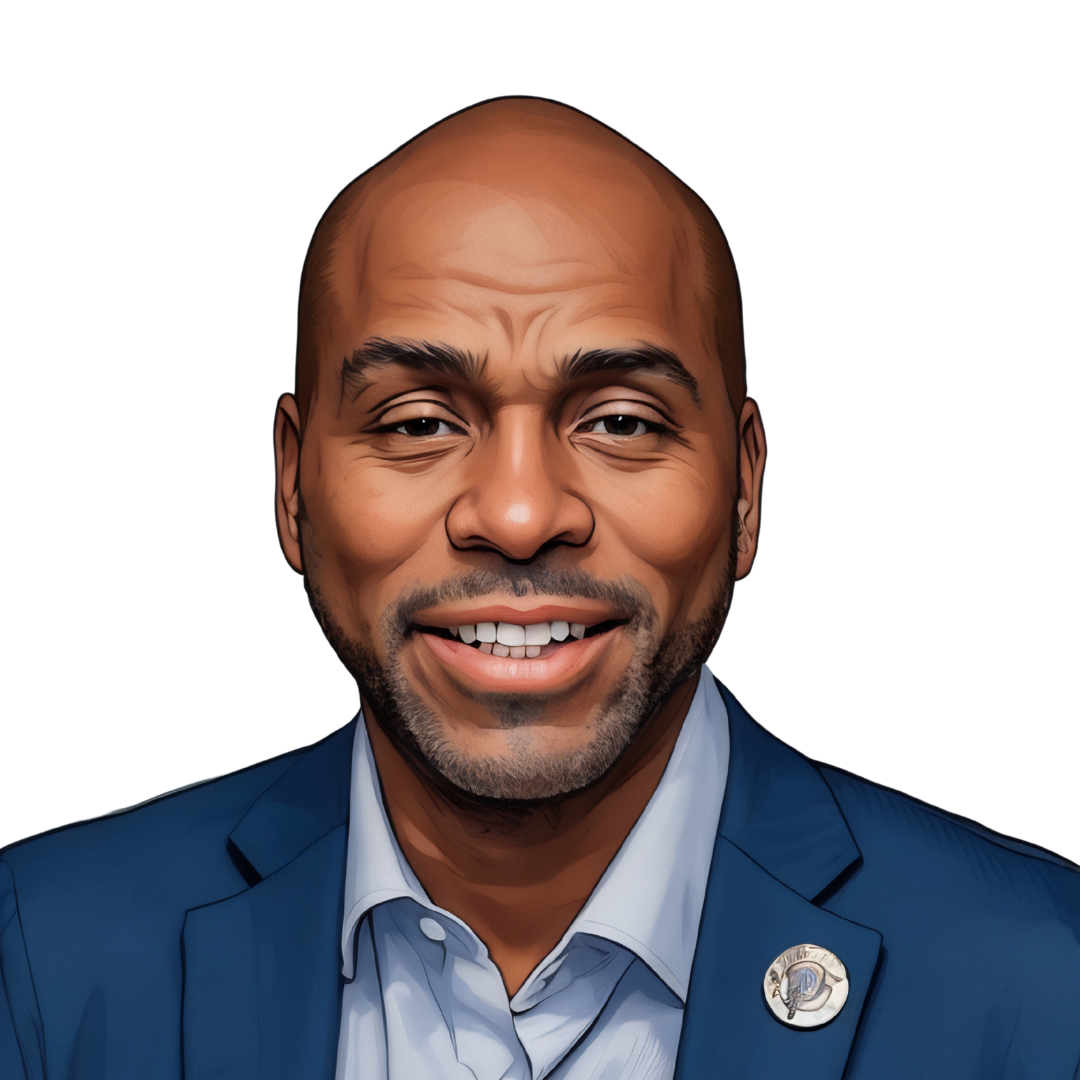
Clarence Levy III, PMP is a PMO Director, fractional PMO consultant, certified PMP instructor, and creative entrepreneur known for helping organizations scale with integrity and operational discipline. He currently serves as PMO Director at Equilibria, Inc. and is the Founder of Levy 3 Consulting, where he delivers enterprise-level project management solutions to growing organizations.
With a background in highly regulated industries, Clarence spent years leading large-scale New Product Introduction (NPI) initiatives in wireless and utility technology environments impacting millions of end users. A PMP since 2012, he built a reputation for transparent reporting, risk management, and delivering projects within tolerance particularly in high-pressure environments where quality and compliance are non-negotiable.
In 2019, Clarence transitioned from corporate leadership to entrepreneurship, founding Levy 3 Consulting to provide fractional PMO services for organizations that need structure without full-time overhead. His work includes designing PMO frameworks, risk plans, reporting cadences, and advanced PMIS implementations using platforms such as Monday.com, Wrike, Jira, and Asana, often unlocking significant gains in efficiency and cost control.
At Equilibria, Clarence helped build a full-scale project management department and supports the company’s global education initiatives as an Authorized Training Partner, delivering PMP Exam Prep and PMI-approved PDUs. He is also the founder of Sabor! Music Enterprises, integrating his music production expertise into structured project workflows.
Clarence is widely respected for merging technical excellence, creativity, and ethics proving that sustainable scale is built on clarity, discipline, and integrity.


More About Host, Alicia Butler Pierre:
Alicia Butler Pierre is the Founder & CEO of Equilibria, Inc. Her career in operations began over 25 years ago while working in various chemical plants and oil refineries. She invented the Kasennu™ framework for business infrastructure and authored, Behind the Façade: How to Structure Company Operations for Sustainable Success. She is the producer of Scale Tales podcast and the weekly top 2% Business Infrastructure podcast with a global audience across 70+ countries.
More About Sponsor, Equilibria:
Equilibria, Inc. is a 20-year-old boutique operations management firm. We build the business infrastructure necessary for fast-growing businesses to scale with less pain. With a range of services and products, entrepreneurs can get the operational support and resources they need on demand.


The Ultimate Business Scaling Guide
Discover how to turn your business into a well-oiled machine with the potential to sell.
On the Go Scaling Training
From chaos to smooth growth that lasts! Get 3 simple tips you and your team can implement today.